


Everest Base Camp and Kala Patthar Trek
Fit walkers who dream of Everest and accept cold nights above 4,000 m.
Next fixed departures
- Dec 1 – 132026via Ama Dablam Base Camp · 13 daysJoin
Join a fixed departure alone, as a couple or with friends, or leave on the date of your choice. All departures
Trek level: Moderate+/Difficult
Accommodation: Lodges
Duration: 12 days, with 5–7 hours of walking per day.
Maximum altitude: 5,545 m (Kala Patthar)
Highlights of this trek
- Prestigious peaks (from 5,500 to 8,848 m).
- Magnificent views of the roof of the world from the second day and throughout the trip. Also an incredible view of the Khumbu Glacier.
- Sherpa country, home of world-famous mountaineers
- Beautiful villages such as Khumjung, and the historic monuments of Tengboche.
- The ultimate sunset over Everest
- Wildlife, flora and fauna.
Note
- The stages are flexible (on request).
- Would you like to know more about our services and the price of this trek?
The itinerary
Day 01: Kathmandu – Lukla (1,350–2,860 m) by plane, then 3½ hours of walking to Phakding (2,600 m)
Day 02: Phakding – Namche Bazaar (2,600–3,440 m), 5½ hours of walking
Day 03: Namche Bazaar – acclimatisation day / excursion to Khumjung village (3,800 m), 4 hours of walking return
Day 04: Namche Bazaar – Tengboche (3,440–3,850 m), 5 hours of walking
Day 05: Tengboche – Pangboche (3,900 m), then Ama Dablam Base Camp (4,570 m) and back to Pangboche, 7–8 hours of walking (depending on fitness)
Day 06: Pangboche – Chhukung (3,900–4,600 m), 6½ hours of walking
Day 07: Chhukung – Thukla (4,600 m), 6 hours of walking
Day 08: Thukla – Gorak Shep (4,600–5,164 m), 5½ hours of walking, followed by the climb to Kala Patthar (5,545 m) in the afternoon, a superb viewpoint over the golden mountains, 3½ hours return
Day 09: Gorak Shep – Everest Base Camp (5,164–5,364 m), then back down to Thukla (4,650 m), 7–8 hours of walking
Day 10: Thukla – Tengboche (4,650–3,850 m), 6 hours of walking
Day 11: Tengboche – Monjo or Jorsalle (3,850–2,740 m), 6½ hours of walking
Day 12: Jorsalle – Lukla (2,740–2,860 m), 5½ hours of walking
Day 13: Lukla – Kathmandu by plane, a 35-minute flight
The Everest Base Camp trek in detail
The Everest Base Camp trek (EBC) takes you in 12 days from Lukla, at 2,860 m, to the foot of the Khumbu Icefall, at 5,364 m, then to the top of Kala Patthar, at 5,545 m, the best viewpoint for Everest. It covers about 130 km there and back, staying in lodges, with no technical difficulty, but at altitude.
The flight to Lukla
It all starts with a flight of about 35 minutes in a small plane to Tenzing-Hillary Airport in Lukla, one of the shortest runways in the world. In high season, from October to November and from March to May, these flights do not leave from Kathmandu but from Manthali, in Ramechhap district, a 4–5 hour drive away. So you set off at night, around 2 or 3 in the morning. The rest of the year, flights take off from Kathmandu. Flights depend on the weather: a spare day at the end of the trip is essential, and we always plan one.
Namche Bazaar, the Sherpa capital
After an easy first stage along the Dudh Koshi, the “river of milk”, you pass the entrance to Sagarmatha National Park, a UNESCO World Heritage Site since 1979. The climb to Namche Bazaar, at 3,440 m, is the first real hill of the trek: 600 m of ascent through pine forest, with a first glimpse of Everest if the sky is clear. Namche is an amphitheatre of colourful houses, with bakeries, gear shops, a Saturday market and a Sherpa museum. You spend an acclimatisation day here, with a walk up to the Everest View Hotel or Khumjung village.
Tengboche, Pangboche and the upper valley
Tengboche Monastery, at 3,860 m, is the largest in the Khumbu. It faces Ama Dablam, the most photographed mountain in Nepal. In October or November, the Mani Rimdu festival brings the monks together here for three days of masked dances. Beyond Tengboche, the trees disappear. From Pangboche, an acclimatisation day takes you up to Ama Dablam Base Camp, at 4,570 m, and back down to sleep in the village: the best preparation for what comes next. You then reach Chhukung, at 4,600 m, at the foot of Island Peak, then Thukla and the memorial to lost climbers, and finally Gorak Shep, the last hamlet, at 5,164 m.
Base camp and Kala Patthar
You climb Kala Patthar, the “black rock”, on the afternoon you arrive in Gorak Shep: at 5,545 m, the view takes in Everest, Nuptse, Pumori and the whole glacier, as the setting sun turns the peaks gold. It is the highest point of the trek and, for most of our trekkers, the best moment of the trip. The next morning you walk to base camp, at 5,364 m: a field of moraine at the edge of the Khumbu Glacier. In spring it fills with expedition tents; the rest of the year it is empty and silent. From there you cannot see the summit of Everest, which is hidden behind the shoulder of Nuptse: that is why Kala Patthar is the trek’s real viewpoint. You go back down to Thukla the same day, then it takes three more days to reach Lukla.
Altitude, cold and comfort
This trek needs no technical skills, but it is spent almost entirely above 3,500 m. The two acclimatisation days, in Namche and around Pangboche, are not negotiable. Every evening Mohan checks in with each person: appetite, sleep, headaches. If anyone shows signs of acute mountain sickness, the next day’s stage is adjusted. The lodges are simple, with a heated dining room; the bedrooms are not heated, and at night in Gorak Shep it easily drops to -10 °C. A sleeping bag with a -10 °C comfort rating is therefore essential; see our gear list. You eat well all along the way: dal bhat, pasta, soups, momos, and most lodges offer paid wifi and charging.
When to go, and other options
October and November have the clearest skies; April and May are milder and let you see the expeditions at base camp. Winter is possible for experienced walkers, with very cold nights but empty trails. Month-by-month details are in our guide Best time to trek in Nepal. If you have more time, the 17-day Everest trek via Gokyo and the Cho La pass adds the turquoise Gokyo lakes and a glacier pass. If you would rather avoid the flight to Lukla, the Pikey Peak trek gives you a view of Everest in seven days from the lower Khumbu, reachable by road.
The trek in photos and videos
Taken by Mohan and his team on recent treks.
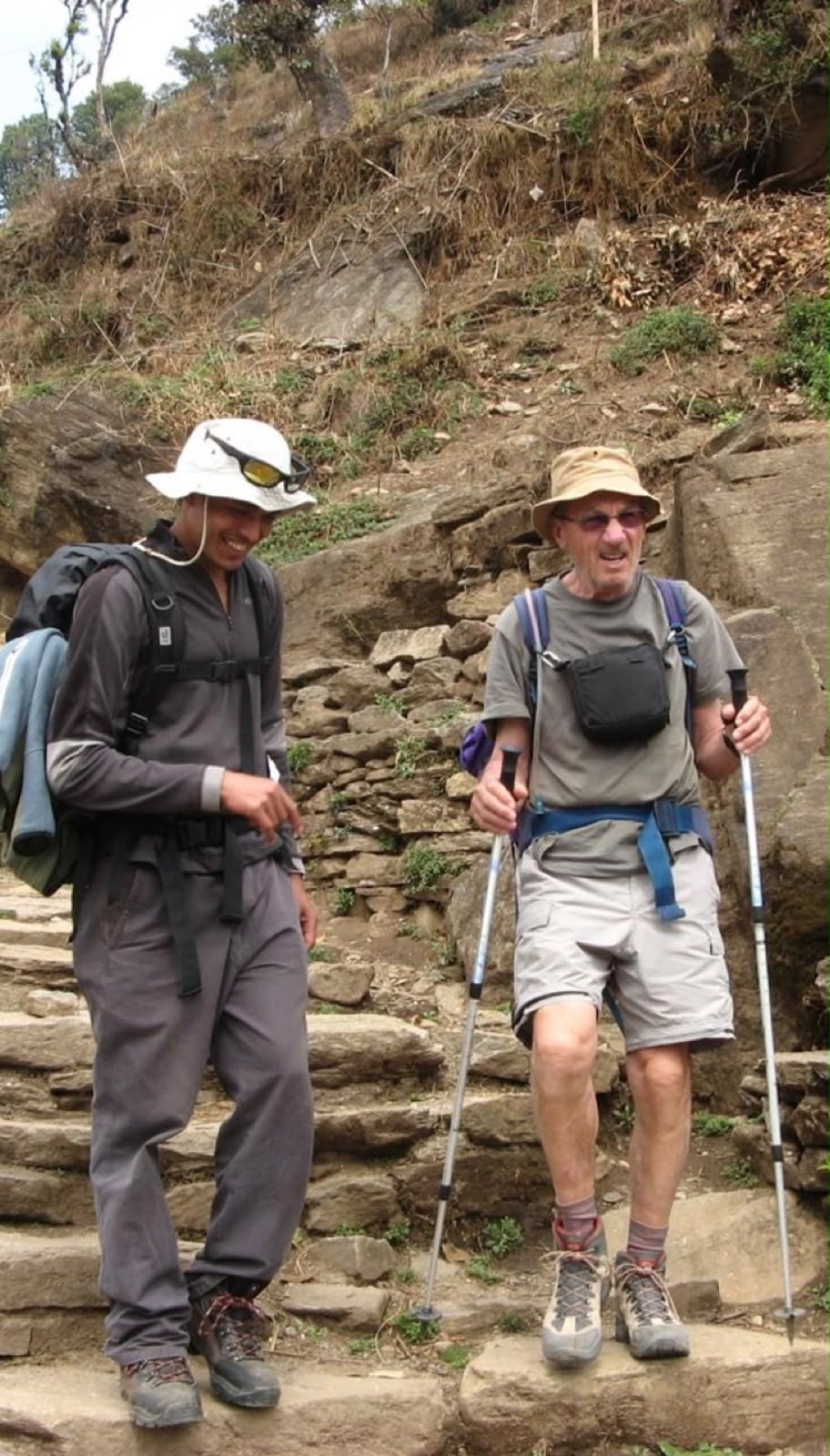
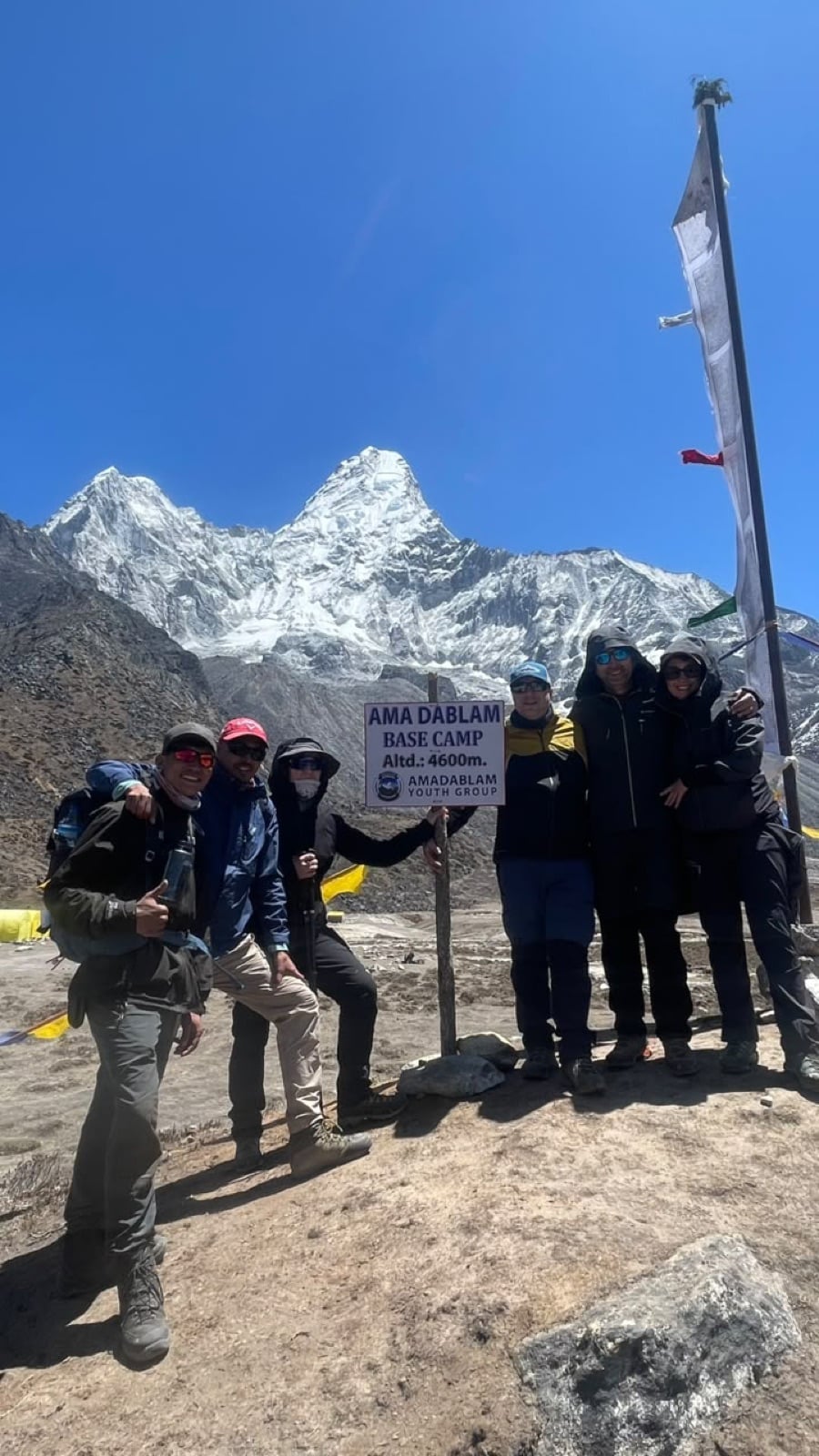
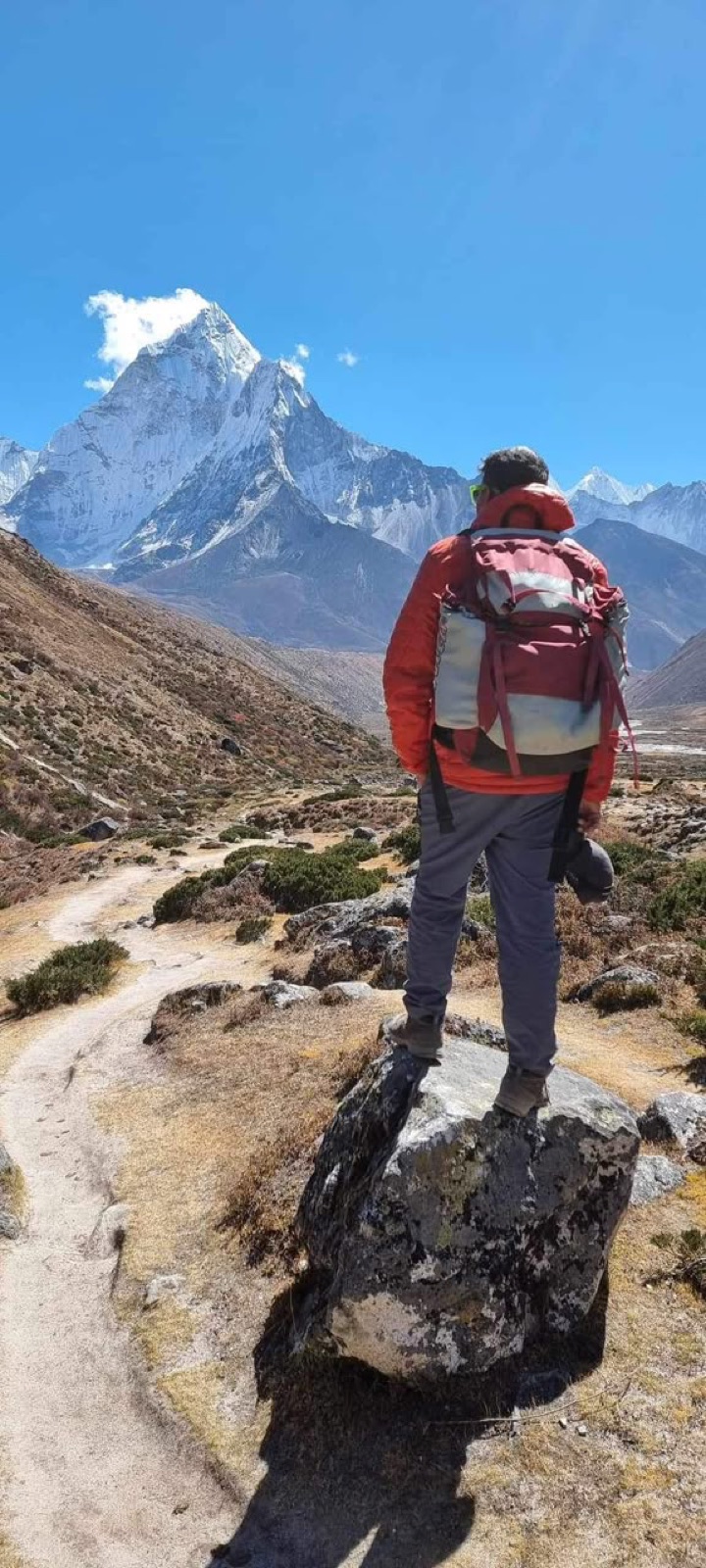
Photo gallery


Our other treks
Trek facts: Everest Base Camp and Kala Patthar Trek
Best time to go
October–November and April–May: passes above 5,000 m can be closed by snow from December to March.
Who is it for?
Fit walkers who dream of Everest and accept cold nights above 4,000 m. Good physical condition needed: 5 to 8 hour days, nights at altitude, one or more sections above 4,000 m.
What the price includes
- Airport welcome and return transfers by private vehicle
- Return domestic flights Kathmandu – Lukla for you and your guide
- TIMS card, local government tax and Sagarmatha National Park entry
- Government-licensed French- or English-speaking guide and 1 porter for 2 participants (max. 25 kg): team wages, meals, accommodation and insurance included
- Nights in lodges (shared double room) for the whole trek
- Full board during the trek: 3 meals a day with tea or coffee
What the price does not include
- International flight and Nepal visa
- Travel and repatriation insurance (mandatory)
- Accommodation and meals in Kathmandu (can be booked on request), sightseeing and entrance fees
- Hot shower, Wi-Fi and battery charging during the trek
- Drinks outside meals (bottled water, soft drinks, alcohol), snacks, personal expenses and tips for the team
Starting price per person, in euros. The final price depends on the number of participants, the season and the options: we confirm it in a free quote.
Permits required (2026 rates)
| Sagarmatha National Park | NPR 3,000 (≈ €20) |
| Khumbu Pasang Lhamu Rural Municipality replaces the TIMS card in the Everest region | NPR 2,000 to 3,000 |
Permits are obtained by the agency and included in the quote. All about trekking permits.
Day-by-day altitude profile
Sleeping altitudes taken from the itinerary above. Hover over a point to see the stage.
Route map
Indicative map of the main stages, OpenTopoMap base map. This is not a GPS track.
Live weather: Namche Bazaar (3,440 m)
Open-Meteo forecast for the region's reference point, for guidance only. At altitude, allow about 6 °C less for every extra 1,000 m.
Frequently asked questions
How many days does the Everest Base Camp and Kala Patthar Trek take?
Allow 12 days from Kathmandu, transport included. The stages are flexible: Mohan adapts the pace to the group, and we always recommend a spare day at the end of your trip.
What fitness level do I need for this trek?
Level: Challenging. Good physical condition needed: 5 to 8 hour days, nights at altitude, one or more sections above 4,000 m. No mountaineering skills are needed.
When is the best time for the Everest Base Camp and Kala Patthar Trek?
October–November and April–May: passes above 5,000 m can be closed by snow from December to March. See our guide When to trek in Nepal.
Which permits are needed and who arranges them?
For this trek: Sagarmatha National Park (NPR 3,000 (≈ €20)), Khumbu Pasang Lhamu Rural Municipality (NPR 2,000 to 3,000). The agency obtains all permits before departure, from a simple copy of your passport. Since 2023, a licensed guide is required in Nepal's protected areas.
Is there a risk of altitude sickness?
The maximum altitude is 5,545 m. Above 3,000 m, acute mountain sickness can affect anyone. The itinerary includes acclimatisation stages and Mohan checks on every participant morning and evening. Read our guide to altitude sickness.
How much does the Everest Base Camp and Kala Patthar Trek cost?
From €1,650 per person, with a guide, porters, permits, lodge nights and meals during the trek, and the transport listed in the itinerary. The exact price depends on the number of participants, the season and the options. The full list of what is included is in the trek facts. Ask for your free quote, or estimate the total budget of your trip with our calculator.
Can I do this trek alone, as a couple or with my family?
Yes. Every departure is tailor-made, on the date of your choice, from one person. The guide and porters work only for your group. See trekking alone in Nepal.
Useful guides: FAQ · when to go · gear · visa · permits · altitude sickness · budget
Interested in this trek?
Mohan answers you personally and adapts the itinerary to your pace, your dates and your budget. Free quote, no commitment.